
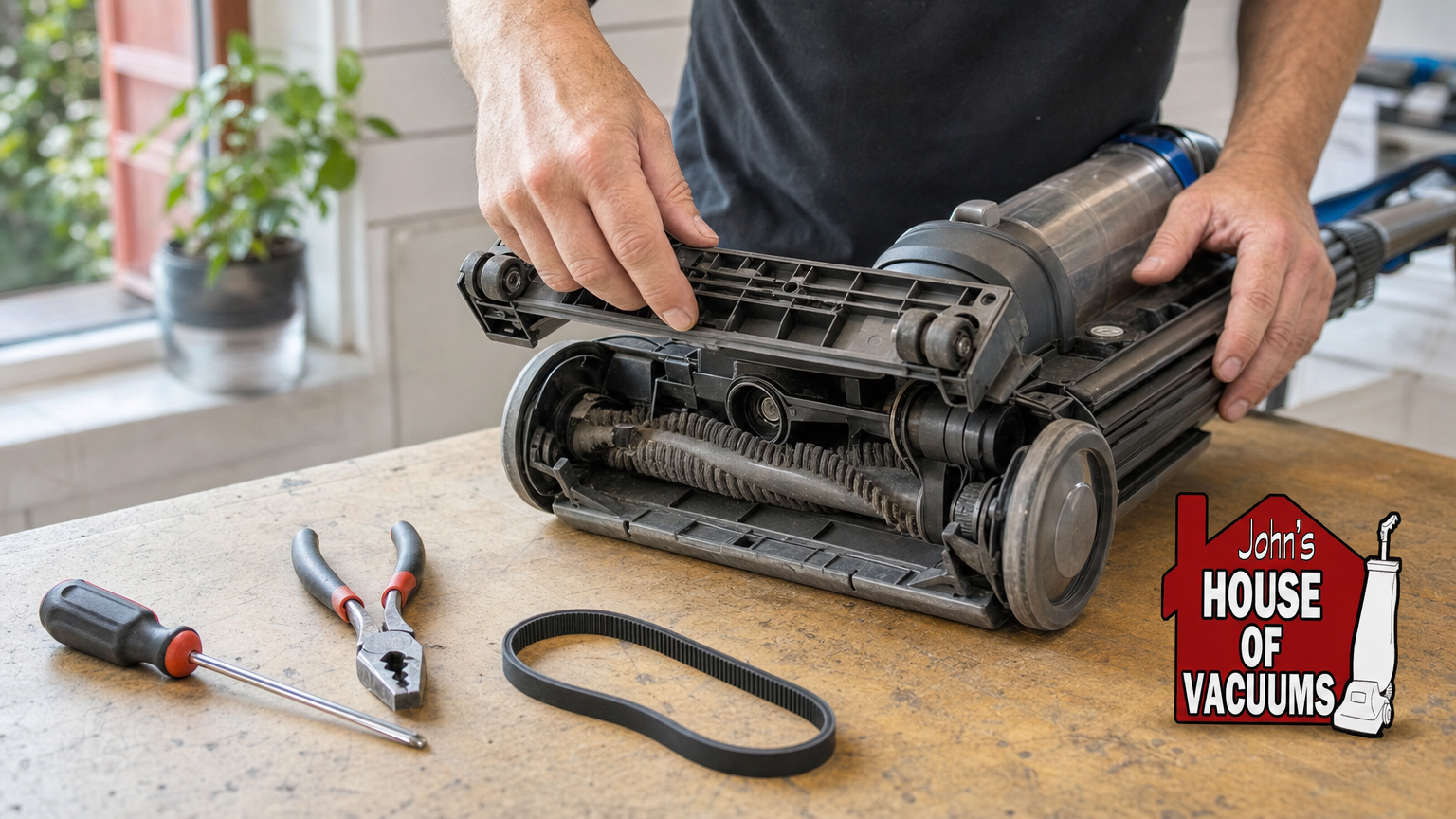
What a Vacuum Repair Typically Costs
There's no flat rate we can quote before seeing the vacuum, and that's true of vacuum repair in general, not just here. What you pay depends on what's actually wrong and what kind of machine you own — a worn belt or a clogged hose is a quick, inexpensive fix, while a failed motor or control board is a bigger job with a higher parts cost. Central vacuum systems add another variable, since the motor unit is usually installed in a basement or garage and the issue could be anywhere along the pipe network rather than in a single part.
Because of that range, the most useful thing a shop can give you up front isn't a number — it's a clear sense of what's likely driving the problem, and an honest read on whether it's worth fixing. You can see what vacuum repair covers and start there.
What Drives the Price Up or Down
A few things move the price more than anything else. The part that failed matters most: belts, filters, and hoses are inexpensive, fast replacements, while motors, circuit boards, and bearings cost more in parts and take longer to diagnose and install. The type of vacuum matters too — an upright or canister machine is usually a self-contained repair, while a central vacuum system is different, since the motor, the piping, and the inlets are separate components, and a loss of suction could mean a clogged pipe, a worn seal, or a motor problem, each with its own cost.
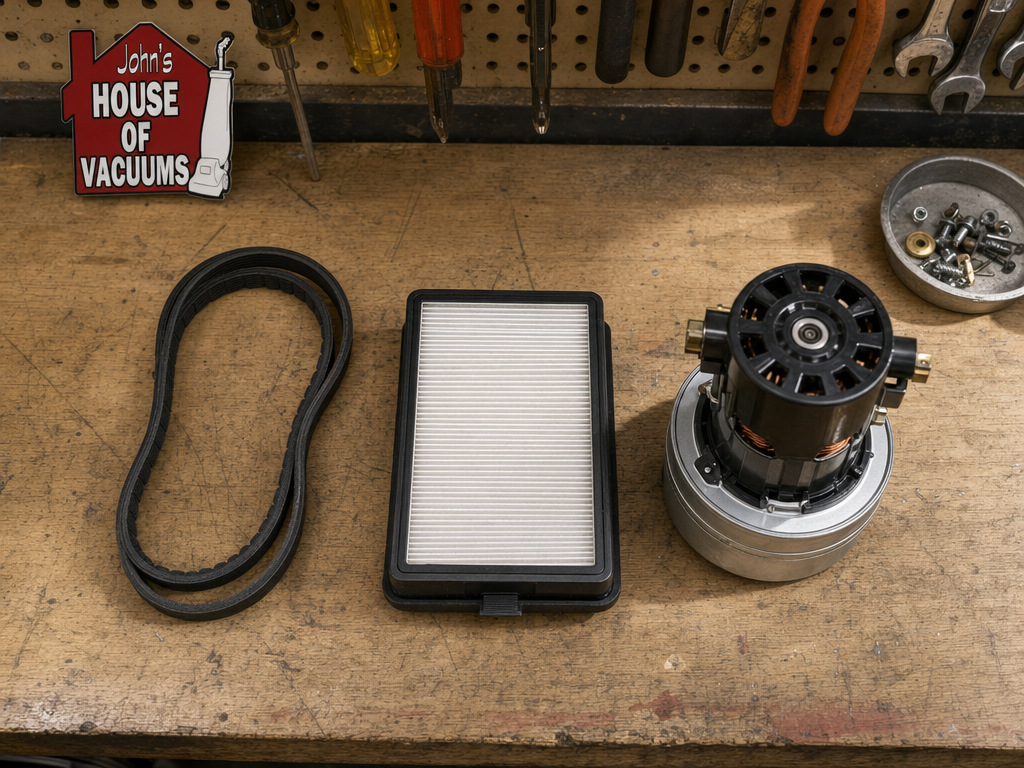
Parts availability plays a role as well. Common, current models usually have parts on hand or easy to order, while older or discontinued machines sometimes need a special-order part, which affects both price and turnaround. And how much teardown the job needs makes a difference: swapping a belt takes minutes, but getting into a sealed canister motor or tracing a central vacuum line takes longer, and that labor is part of what you're paying for.
None of this is unique to one brand — it's simply how vacuum repair pricing works, which is why a real number follows an actual look at the machine rather than a phone estimate.
A Worked Example: Two Common Complaints, Two Different Price Ranges
Picture two vacuums that come in the same week, both described as "not working right." The first has no suction at all. A technician checks the obvious things first — is the bag or canister full, is the filter clogged, is the hose blocked, is the belt broken or slipped off the roller. Most of the time it's one of those, and the fix is a part swap that takes a few minutes once the machine is open. That's the cheap end of vacuum repair, and it's also the most common reason people call in the first place.
The second vacuum won't power on at all. That's a different diagnostic path — a technician has to check the cord, the power switch, and the thermal fuse, and if none of those is the culprit, the motor itself. A burnt motor winding or a failed control board means more labor to access and test, and a part that costs more than a belt or a filter. Two vacuums, two very different repair bills, and the only way to know which category yours falls into is to have it looked at.
Repair or Replace?
As a general rule, a repair is worth doing if the cost is well below what a comparable new machine would cost, and the rest of the vacuum is in good shape. A worn belt or a clogged hose on an otherwise solid machine is an easy call. A failed motor on a vacuum that was inexpensive to begin with is a harder one, since the repair cost can end up close to replacement.
Well-built machines — including many canister vacuums and central vacuum systems — tend to be worth repairing more often than low-end bagless uprights, simply because the rest of the unit holds up and the repair extends the life of a machine that was already a solid investment. Sealed canister motors and central vacuum power units are also built to be serviced rather than thrown away, which is part of why those systems often make more financial sense to repair than a disposable-feeling bagless upright with plastic components throughout.
That's a general guideline, not a promise about any specific machine; the only way to know for sure is to have it looked at. If a diagnosis does point toward replacement, it's worth comparing the repair estimate against a new vacuum cleaner in the same class before deciding either way.
Getting an Accurate Price
This question comes up often enough from people searching around Kennett Square, PA that it's worth saying plainly: bring the vacuum in, or get it looked at, and you'll get a real number instead of a guess. We also serve the area around Hockessin, DE.
Either way, the more specific you can be about what the vacuum is doing — no suction, won't power on, a burning smell, a grinding noise — the faster the diagnosis, and the sooner you have an actual price instead of a range. It also helps to know the model name or number if it's still on the machine, since that tells a technician what parts are available and whether they're on hand or need to be ordered.
Parts availability is usually the biggest variable in how long a repair takes, more than the repair work itself. A common, current model with a worn belt can often be turned around quickly. An older or discontinued machine needing a special-order part takes longer, simply because the part has to arrive before the job can be finished. There's no published turnaround time to quote here — it genuinely depends on what's wrong and what's in stock — but asking when you bring the vacuum in will get you a straight answer.
Questions and answers
Is it cheaper to repair a vacuum or buy a new one?
It depends on what's broken and what the vacuum cost to begin with. A simple fix on a solid machine is almost always worth it. A major repair on a low-end machine can end up close to the price of a new one, which is why it's worth getting a diagnosis before deciding either way.
What's the most expensive part of a vacuum to fix?
Generally, motors and circuit boards cost more than belts, filters, or hoses, both in parts and in the labor needed to access and replace them. Central vacuum systems can add cost if the problem is in the piping rather than a single replaceable part.
Is there a charge just to get my vacuum diagnosed?
That varies by shop and by what's involved in finding the problem. There's no flat published diagnostic fee to quote here, so the simplest thing is to ask when you call or bring the vacuum in.
How long does a vacuum repair usually take?
It depends mostly on parts availability. A quick fix like a belt or filter swap can often be handled fast if the part's in stock. A part that has to be special-ordered for an older or discontinued model will take longer. Ask at drop-off for a realistic timeline once the problem's identified.
Bring your vacuum in, or get in touch through the vacuum repair page, for a direct look at the machine and an actual price.