
Start With What You're Actually Cleaning
Before you look at a single vacuum, answer this one: what are you cleaning, and who's in the house?
Carpet and hardwood pull you toward different machines. Pets mean you want strong suction and a filter that holds up to hair and dander. Allergies in the house mean sealed filtration matters more than attachments or color. Stairs mean weight and handle design matter more than almost anything else. Write down your answers before you walk in — it turns a vague "show me your vacuums" conversation into a short, useful one.
Repair or Replace — Ask This Before You Buy New
If the vacuum you have now stopped working, broke a belt, lost suction, or just feels worn out, it's worth asking whether it's worth fixing before you spend money on a new one. A lot of vacuums that seem dead just need a new belt, a cleared hose, or a motor brush replaced — repairs that cost a fraction of a new machine. We go over this kind of thing regularly; you can read more about how we approach vacuum cleaner repair before deciding which direction makes sense for your machine.
Bagged or Bagless — and Why the Bag Itself Matters
Bagged vacuums generally hold a better seal against dust escaping back into the room, which matters if anyone in the house has allergies or asthma. Bagless models skip the ongoing cost of bags but tend to release more fine dust when you empty the canister.
If you go bagged, ask what bags the model takes and whether they're easy to find later — some machines use proprietary bags that get harder to source over time. We carry Magnesium HEPA odor-fighting bags for households dealing with pet odor or allergy sensitivity, and Ironman hand vacuum bags for smaller handheld models — worth checking before you commit to a machine whose bags are hard to replace.
Can You Actually Lift and Maneuver It?
A vacuum that's too heavy gets used less, plain and simple. If you're hauling it up and down stairs, weight and balance matter more than horsepower numbers on the box. Test this in the shop if you can — pick it up, tip it back, push it across the floor. A machine that feels fine standing still can feel very different after ten minutes of real cleaning.
Is a Central Vacuum System Worth Considering?
If you're renovating, building, or just tired of hauling a canister room to room, a central vacuum system is worth a look before you buy another portable machine. It's a bigger decision with real trade-offs, and it's not right for every home or budget. We've written a longer piece on what to think through before going that route — why you shouldn't buy a premium vacuum cleaner until you read this first covers it in more detail than makes sense here.
Canister or Upright — Two Models Worth Looking At
Canisters tend to be better for stairs, under furniture, and tight corners because the body stays on the floor and you're just guiding a hose and head. Uprights tend to be faster for open carpet and easier to store upright in a closet. Neither is universally better — it depends on your floor plan.
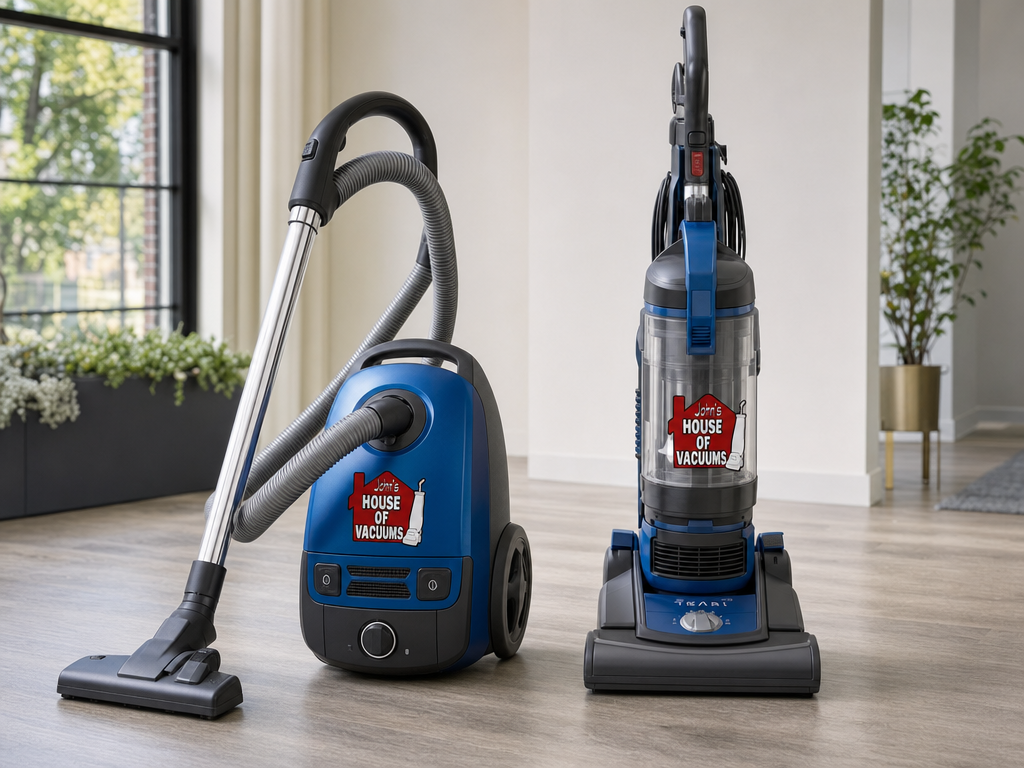
If you want to see what each looks like in practice, the Miele Classic C1 canister is a solid example of the canister style, and the Sebo Essential G4 upright is a good example of what a well-built upright offers. Looking at the actual specs side by side is more useful than reading a general description of either category.
What to Ask the Shop Before You Pay
Ask whether the model you're considering is something the shop can service down the line, and whether replacement parts and bags are easy to get. A vacuum that can't be repaired or resupplied locally tends to get replaced sooner than it should. Ask what maintenance the specific machine needs — belt changes, filter replacement, brush roll cleaning — so you're not guessing six months in. A shop that sells vacuums and also repairs them should be able to answer all of this on the spot, not point you to a manual.
Questions and answers
Is it better to buy a bagged or bagless vacuum?
It depends on your household. Bagged vacuums hold a tighter seal against dust escaping, which matters for allergies. Bagless models cost less over time but release more dust when emptied. If allergies are a concern, bagged with a good filtration bag is usually the safer choice.
How do I know if my old vacuum is worth repairing instead of replacing?
If the machine is otherwise solid and the problem is a belt, hose clog, worn brush roll, or motor brush, repair is usually cheaper than replacement. If the motor itself has failed or the body is cracked, replacing it often makes more sense. Worth asking before you assume it's done.
What should I ask about bags before buying a bagged vacuum?
Ask whether the bags are a common, easy-to-find size or a proprietary one specific to that model. Some machines use bags that get harder to source a few years in, which turns a cheap ongoing cost into an annoyance.
If you're weighing a few options, stop in or call the shop and walk through your specific home and floors with us before you buy — it's easier to get it right the first time than to return a vacuum that doesn't fit.