
The Short Answer
Most vacuum cleaners last somewhere around eight years with normal household use, but that number moves a lot depending on three things: how the machine was built, how often it runs, and whether it gets basic maintenance along the way. A budget bagless upright run daily in a busy household with kids or pets can start struggling after four or five years. A well-built machine that's serviced when it needs it can push well past ten.
When a vacuum comes in for repair, the real question we're answering isn't "how old is it," it's "has this machine reached the point where fixing it costs more sense than replacing it." Age alone doesn't answer that — condition does. If you're bringing a machine in from the Kennett Square, PA area, that's usually the first thing we sort out before quoting any repair.
What Actually Wears Out First
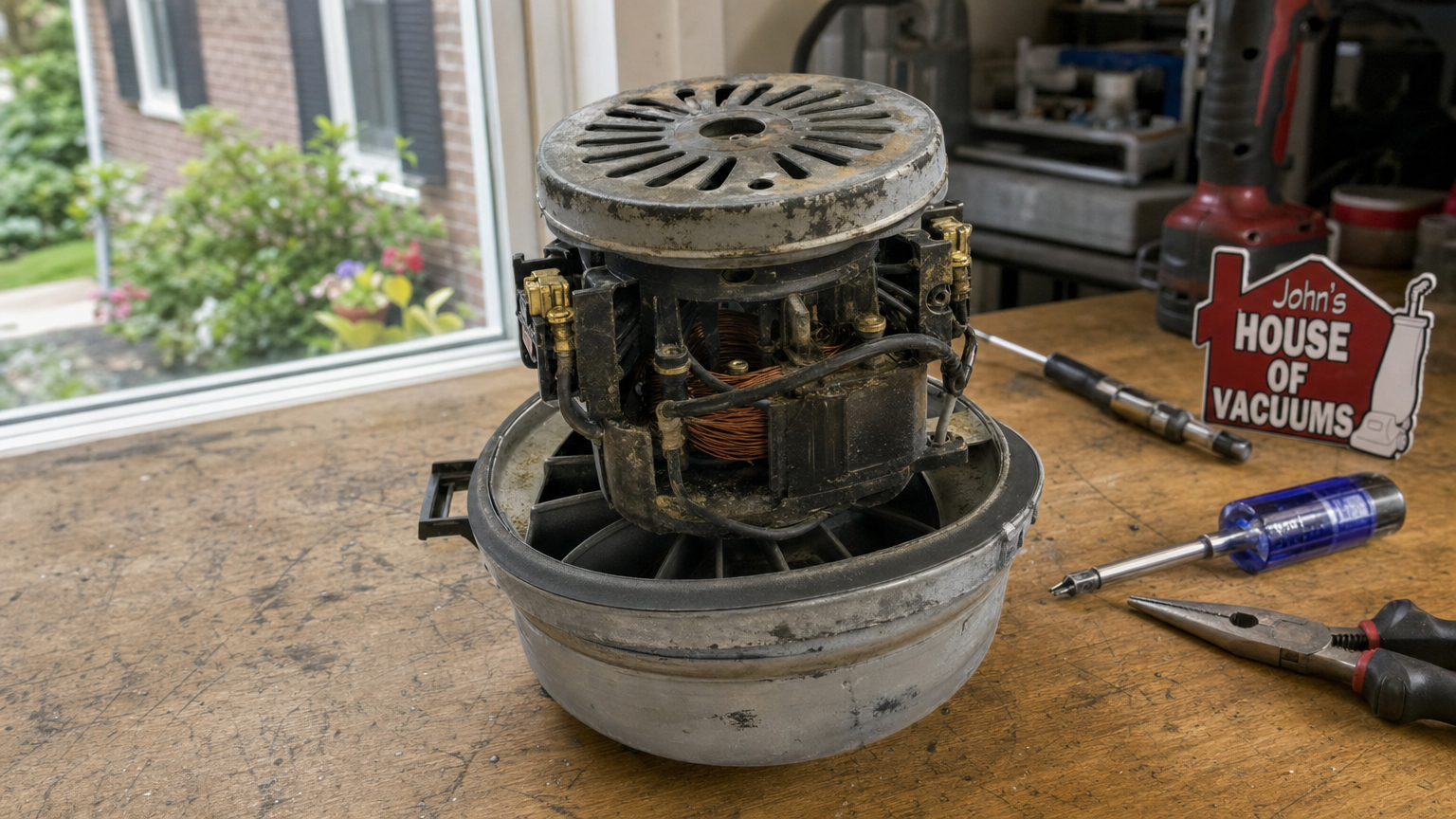
On almost every vacuum, the motor is the part that determines whether the machine lives or dies, and the motor's enemy is restricted airflow. A clogged filter or full bag makes the motor work harder and run hotter than it was designed to, and heat is what kills motor bearings and windings over time. Belts and brushrolls wear out too, but those are simple, inexpensive repairs — a tired motor is usually the point where replacement starts to look more sensible than another repair bill.
Cords, switches, and hose connections fail less often, but they're also usually cheap and quick to fix. It's almost always the motor, not these smaller parts, that sets the real ceiling on a vacuum's lifespan.
What Shortens a Vacuum's Life
The single biggest cause of early failure we see is simple neglect of filters and bags. A full bag or a clogged filter doesn't just hurt suction — it forces the motor to pull against resistance it wasn't built for, and that shortens its life every time it happens. Running a bagless machine with a filter that hasn't been washed in months does the same thing.
Using the wrong bag or filter for the model causes similar strain, which is part of why getting magnesium HEPA odor-fighting bags or the correct match for your machine matters more than it seems. A burning smell, a sudden drop in suction right after a filter change, or a motor that sounds like it's straining are all signs the clock is running faster than it should.
What Stretches a Vacuum's Life
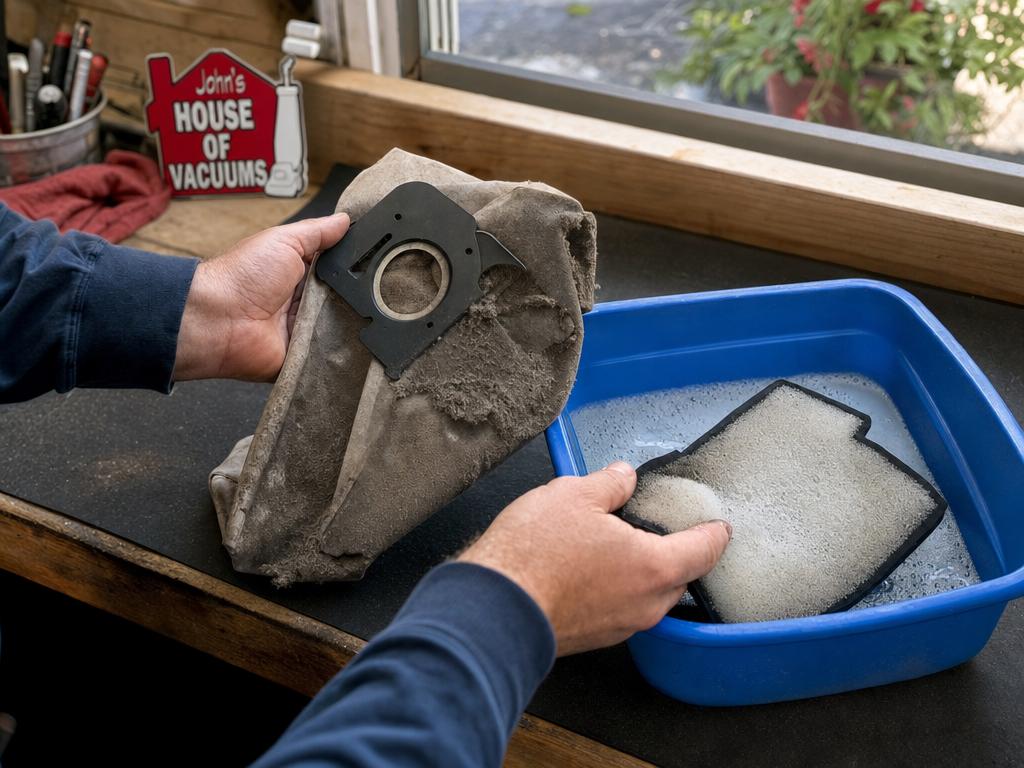
Routine maintenance is the cheapest insurance a vacuum owner has. Changing bags before they're completely full, washing or replacing filters on schedule, clearing hair and debris from the brushroll, and checking the belt periodically all keep the motor working the way it was designed to. We've put together a practical rundown of these steps in how to supercharge your vacuum cleaner, and most of it takes a few minutes with tools you already own.
Storage matters too — a vacuum left in a damp basement or knocked around in a closet wears differently than one kept somewhere dry and accessible.
Repair or Replace?
A vacuum is usually worth repairing when the motor is still sound and the problem is a belt, brushroll, switch, hose, or filter issue — these are straightforward, affordable fixes on most machines. It's a harder call when the motor itself is failing, especially on an older or lower-end model where parts may be hard to source or the repair cost starts approaching what a new machine would run.
If you're not sure which situation you're in, that's exactly the kind of question worth asking before buying a replacement outright. You can bring it in for a repair diagnostic and get a straight answer on what's actually wrong and whether it makes sense to fix it.
Buying for a Longer Lifespan Next Time
If you're replacing a vacuum rather than repairing one, the build quality matters more than the feature list. A machine that's designed to be serviced — with accessible belts, replaceable filters, and parts that are still available years later — tends to last longer than one built to be disposed of when something fails. If you want to see what that looks like in practice, our pages for the Miele Classic C1 canister go over what each model offers in more detail.
Questions and answers
Do bagged vacuums last longer than bagless ones?
Generally, bagged vacuums put less strain on the motor over time because changing a bag is simple and people tend to do it before it's completely full. Bagless vacuums rely on the owner washing and drying the filter regularly — skip that step and the motor works harder than it should, which shortens its life.
How often should a vacuum be serviced?
As a general rule, a basic check of the filter, belt, and brushroll once a year keeps most vacuums running the way they're supposed to. Households with pets, heavy carpet, or daily use should check these more often, since debris builds up faster.
Is it worth repairing an older vacuum?
It depends on what's actually wrong. If the motor is still strong and the issue is a belt, hose, switch, or filter, repair is usually the more sensible option. If the motor itself is failing on an older or lower-end machine, it's worth getting a diagnostic before deciding, since parts availability and repair cost both factor in.
If your vacuum is losing suction or you're not sure whether it's worth repairing, bring it in for a diagnostic and we'll give you a straight answer before you spend on a fix or a replacement.