
Repair or Replace? Start Here
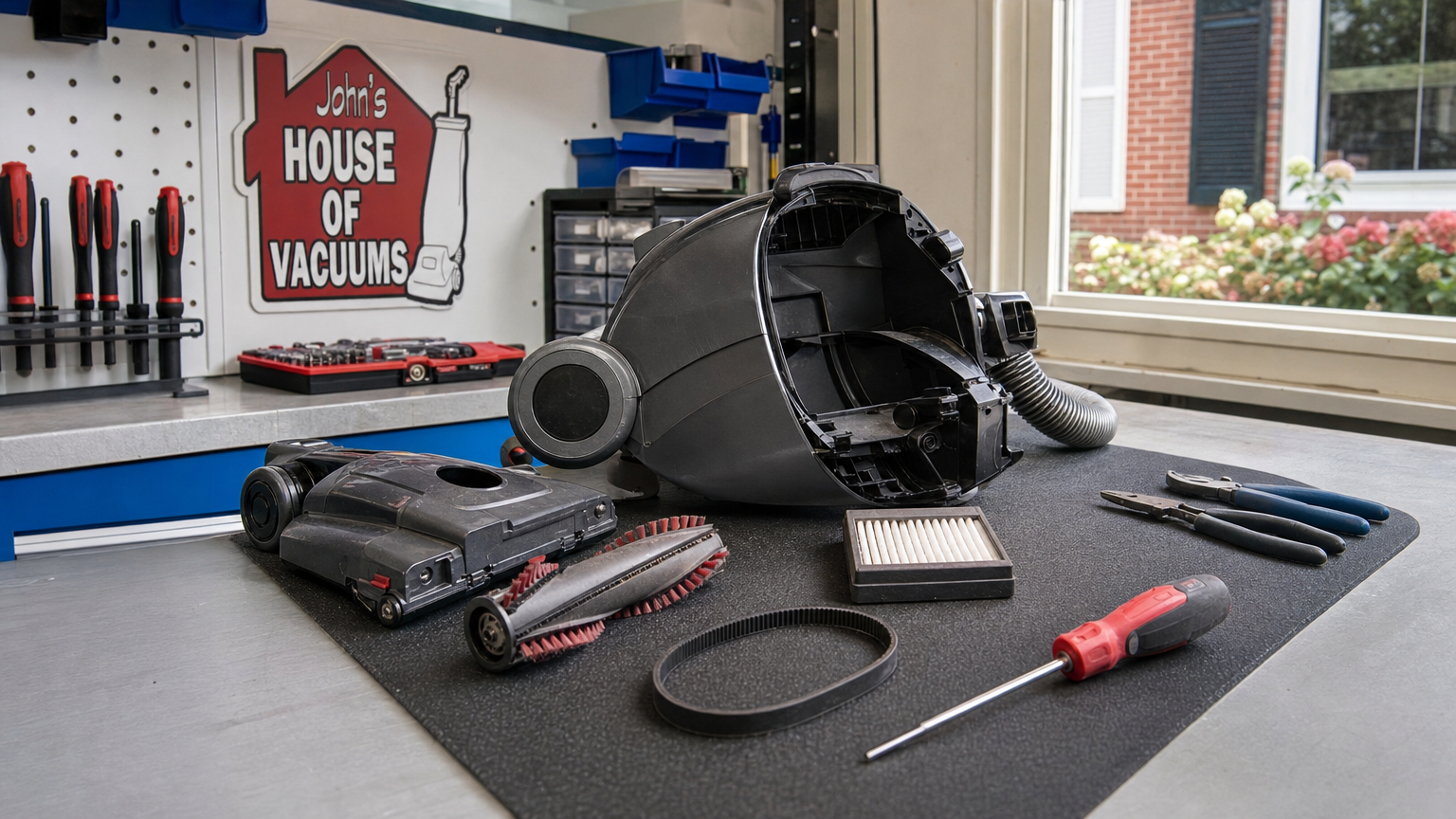
Whether it's worth repairing your vacuum depends mostly on three things: what's actually wrong, how old the vacuum is, and what kind of vacuum it is. A clogged hose, a worn belt, or a brush roll that's stopped spinning are usually quick, inexpensive fixes — almost always worth doing rather than replacing the machine. A motor failure on an older, lower-cost upright is a different story; sometimes the repair cost gets close enough to a new vacuum that replacing it makes more sense.
Central vacuum systems tend to tip the scale toward repair more often than portable vacuums do, since the power unit is built into the house and the parts that usually wear out — hoses, inlet valves, switches — are the parts being repaired, not the whole system.
A Worked Example: Two Vacuums, Two Different Calls
Picture two customers bringing in uprights for the same complaint — the vacuum won't pick up pet hair the way it used to. The first machine is a few years old, a mid-range model, and the problem turns out to be a worn belt and a brush roll clogged with hair wound around the bearings. That's a straightforward repair: clean out the bearings, replace the belt, and the vacuum runs the way it did on day one. The second machine is older, a budget model that was inexpensive when it was new, and the loss of suction traces back to a failing motor. Replacing a motor on a machine like that often costs enough that it's worth comparing to a new vacuum in the same price range, rather than assuming repair is automatically the cheaper path. Same symptom, two different machines, two different answers — which is exactly why a diagnostic conversation matters more than a general rule of thumb.
Questions to Ask Before You Book a Repair
Before you hand over your vacuum, ask a few direct questions. Is there a diagnostic step before any work starts, or can they tell you what's wrong over the phone or at the counter? Are parts for your specific model something they'd have on hand, or would it need to be ordered? And will they call you with a price before doing anything that costs more than expected?
The honest answer to most of these depends on the model and the problem, which is exactly why it's worth asking rather than guessing. You can read more about how we approach repair work before you bring a vacuum in, if you want a sense of what the process looks like.
It's also worth asking directly: if the repair isn't worth it, will they tell you that, or just go ahead and complete whatever work you authorized? A shop that's upfront about when replacement makes more sense than repair is giving you better information than one that only talks about fixing what's in front of it.
Signs Your Vacuum Is Worth Fixing
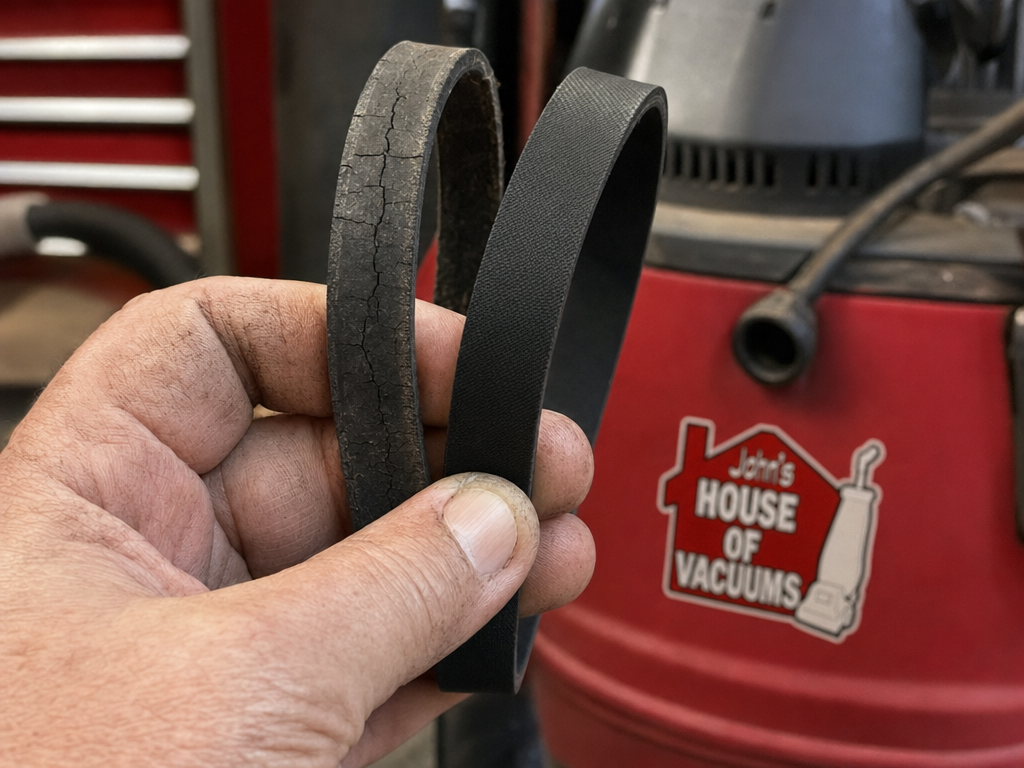
A few symptoms are almost always cheaper to fix than to replace around. Loss of suction is frequently a clogged filter, a full bag, or a blocked hose — not a dead motor. A burning-rubber smell usually points to a worn or slipped belt. A vacuum that won't turn on at all is often a cord, a switch, or a thermal cutoff that tripped, rather than anything structural. A brush roll that's stopped spinning is typically a belt or brush roll replacement, not a sign the machine is finished.
One distinction worth knowing: on a bagless vacuum, loss of suction is often the filter — it needs to be rinsed or replaced more often than most people expect, since a clogged filter chokes airflow the same way a full bag does on a bagged model. If you haven't cleaned or swapped the filter in a while, that's worth ruling out before assuming something's broken.
If you're dealing with any of these, it's worth getting an opinion before you write the vacuum off. Our vacuum repair page has more detail on the kinds of issues we look at.
Central Vacuum Systems: A Different Calculation
Central vacuum systems age differently than portable ones. The power unit sits out of daily use — usually in a garage or basement — so it tends to outlast the hoses, inlets, and switches that see the actual wear. When something stops working, the fix is often one of those smaller parts rather than the whole unit. If you're weighing a central system's air quality benefits against the cost of keeping it running, this page on central vacuum systems and air quality is worth a look, and our central vacuum category page covers the systems themselves.
When Replacement Makes More Sense
There's a point where fixing an old vacuum stops making financial sense — usually when the machine was inexpensive to begin with, it's already had more than one repair, and the next quote is close to what a new one would cost. If you're at that point, it's worth comparing options rather than defaulting to whatever's cheapest on a shelf. Our guide on choosing the right vacuum walks through what actually matters when picking a replacement, so you're not just swapping one wrong fit for another.
What to Tell Us When You Call or Bring It In
A few details speed things up: the model number (often on a sticker under the vacuum or on the canister), a plain description of what it's doing or not doing, and whether anything unusual got sucked up recently — a coin, a sock, pet hair in large amounts. None of that is required, but it helps us give you a faster, more accurate answer instead of a generic one.
Questions and answers
How do I know if my vacuum is worth repairing?
It usually comes down to the problem and the vacuum's cost new. Belts, clogs, filters, and brush rolls are almost always worth fixing. A failed motor on an older, budget machine is worth getting a quote on before you decide, since sometimes repair and replacement cost close to the same.
Can central vacuum systems be repaired, or do they need full replacement?
Most central vacuum issues involve a hose, inlet valve, or switch rather than the power unit itself, so repair is usually possible without replacing the whole system.
What should I bring when I drop off a vacuum for repair?
The vacuum itself, along with the model number if you can find it, and a description of what it's doing wrong. That's generally enough to get started.
Does it matter if my vacuum is bagged or bagless?
Not for whether it's worth repairing, but it does change where to look first. A bagless vacuum's filter needs more frequent cleaning than a bagged vacuum's bag needs changing, and a neglected filter is one of the most common causes of lost suction on bagless models.
Will a repair shop tell me if it's not worth fixing?
A straightforward shop will say so plainly rather than just doing whatever work you authorize. It's a fair thing to ask before you commit to a repair.
If you're not sure whether your vacuum is worth fixing, bring it in or give us a call with the model and the symptom — we'll tell you straight whether repair or replacement makes more sense.