
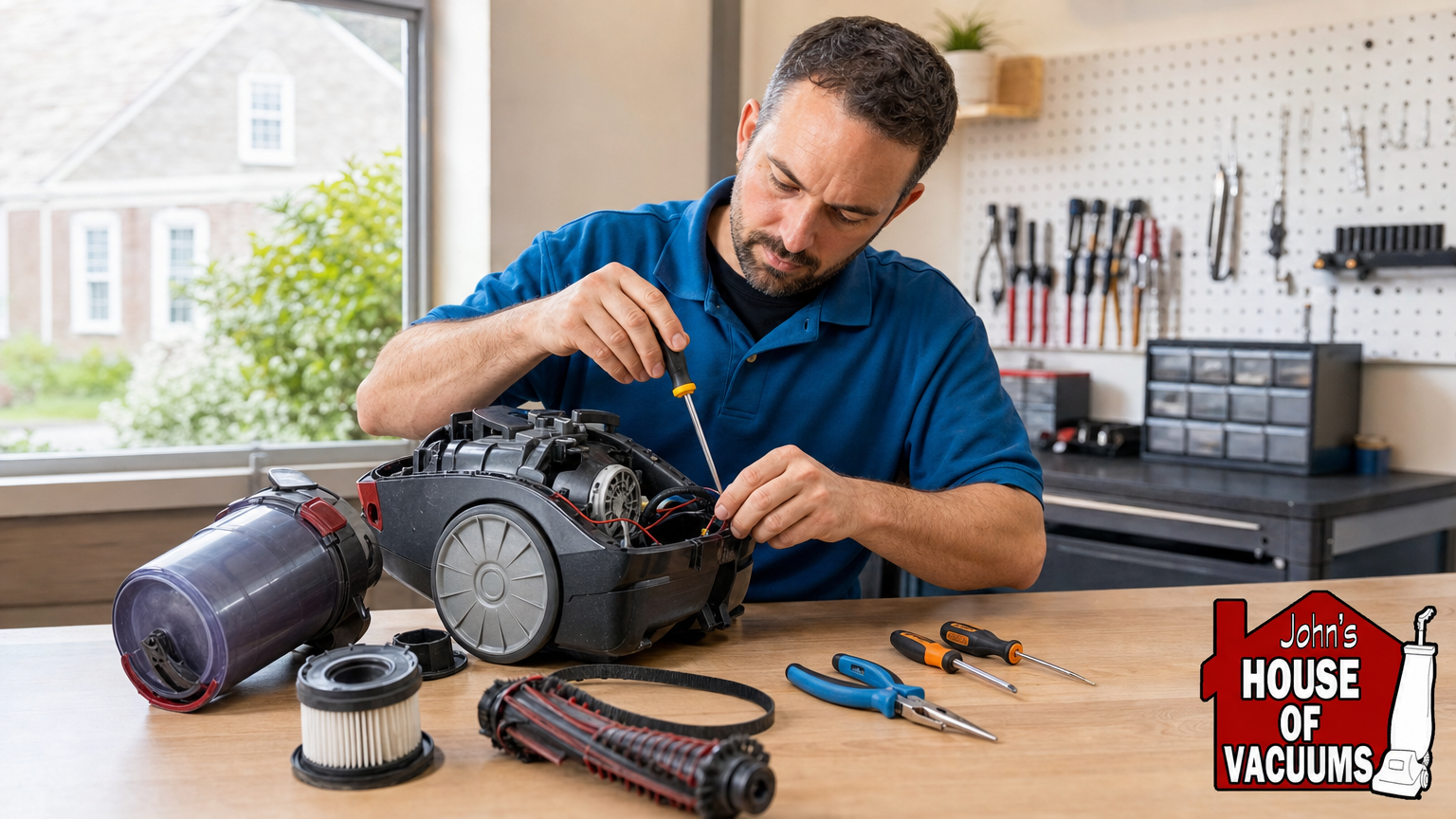
The Short Answer
Most of the time, yes — if the vacuum is a well-built model and the problem is mechanical rather than structural. A cracked plastic housing, a burned-out motor on a disposable-grade machine, or a model so old that parts are no longer made for it usually isn't worth chasing. But a clogged hose, a worn belt, a tripped thermal cutoff, or a motor that's lost suction because of a dirty filter almost always costs less to fix than a new vacuum costs to buy — and you end up with a machine you already know how to use.
At John's House of Vacuums we repair and service Dyson, Kenmore, Kirby, Miele, Oreck, Proteam, Riccar, SEBO, Shark, Windsor and most other brands for customers around Kennett Square, Wilmington, and Newark, Delaware. We see this decision from both directions, which is why the answer is genuinely "it depends on the vacuum and the problem," not a blanket yes or no.
How Much Does Vacuum Repair Typically Cost?
What makes repair worth it isn't the dollar figure on its own — it's that figure compared to what the vacuum is worth and what a comparable replacement would cost. A few things drive the number: which part failed, whether the manufacturer still supports that model with parts, and whether it's the motor itself that's damaged or something simpler like a switch, belt, hose, or filter.
Because that range depends so much on the specific vacuum and the specific fault, the only honest way to answer "how much will this cost" is to have it looked at. We offer a tune-up service we call the Performance Maintenance Tune-Up, which cleans, inspects, and services a vacuum rather than just patching the one symptom you noticed — useful if a machine is underperforming but you're not sure why.
What's the Life Expectancy of a Vacuum Cleaner?
There's no single number that applies to every vacuum, because build quality and maintenance matter more than age alone. Machines designed with serviceable parts — replaceable belts, accessible motors, washable or replaceable filters — tend to last considerably longer than sealed, disposable-style models, provided they're maintained along the way.
A vacuum that's never had its filter changed or its brush roll cleared of hair wears out its motor far sooner than one that's had regular upkeep, regardless of brand or price point. That's a big part of why two vacuums of the same age can be in completely different condition when they come in for service.
The Most Common Vacuum Problems We See
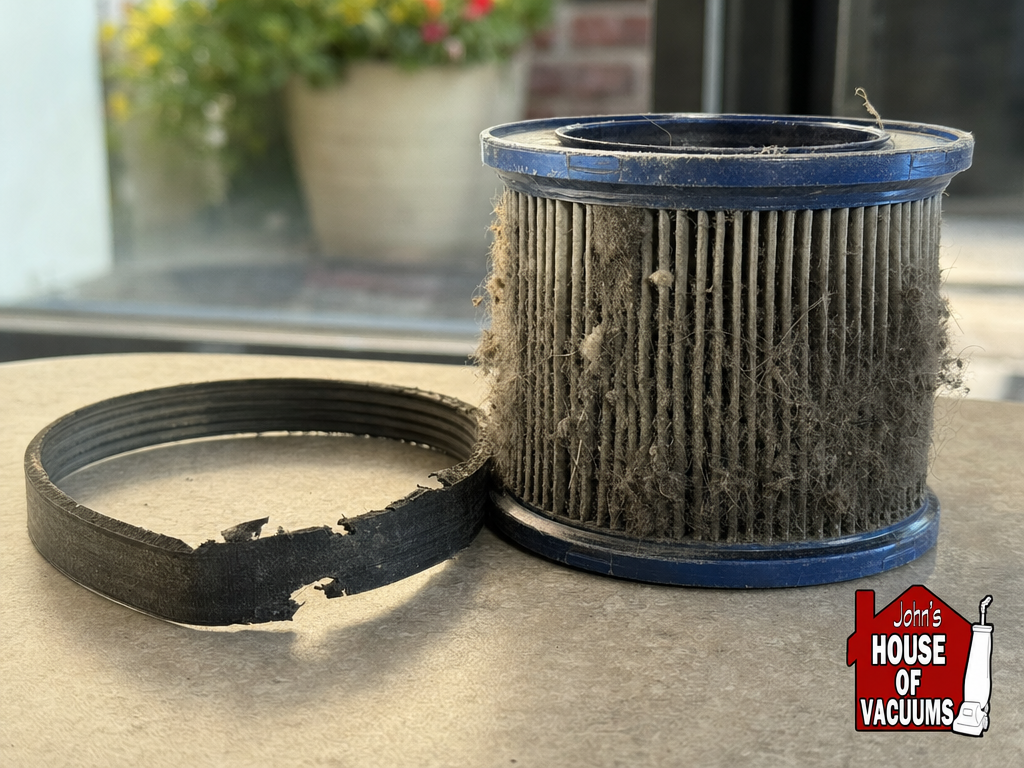
Loss of suction is the complaint we hear most, and it's rarely the motor itself — it's usually a full bag or canister, a clogged filter, a blocked hose, or a brush roll wrapped in hair and thread. Overheating and automatic shutoff is the next most common issue, and it's almost always a symptom of one of those same blockages rather than a failing motor on its own.
If you're trying to figure out what's wrong with a specific brand before deciding whether repair is worth it, our Shark vacuum troubleshooting guide walks through the checks worth doing yourself before bringing it in.
Which Vacuums Are the Most Repairable?
In general, vacuums built to be serviced — with belts, filters, bags, and brush rolls designed to be replaced rather than discarded — are the most repairable, because parts stay available for longer and the design doesn't fight you when something needs to come apart. Sealed, all-in-one units built for a low shelf price are harder to justify repairing once something inside fails, because the labor to get at the part can cost more than the vacuum did.
We're an exclusive Sebo dealer, and one practical advantage of that line is parts support: buying from us gets a full ten-year warranty versus five years elsewhere, and we stock the bags, belts, and supplies that keep that line serviceable for years after purchase. That kind of ongoing parts availability is exactly what makes a vacuum worth repairing instead of replacing when something eventually does fail.
When Repair Makes Sense — and When It Doesn't
Repair generally makes sense when the vacuum is a quality model, parts are still available, and the fault is something mechanical rather than a cracked body or a fried motor. It makes less sense on a low-cost model where the part and labor start to approach what a new machine would cost, or where the manufacturer has stopped supporting it with parts.
If you bring a vacuum in and it turns out replacement is the better call, we also take trade-ins and demonstrate every vacuum we sell hands-on before you buy it, so you can see how it actually performs rather than taking our word for it. And any repair we do carries our guarantee, so you're not gambling on whether the fix holds.
Bring your vacuum in to John's House of Vacuums in Kennett Square, or call (484) 732-7956, for an honest look at whether it's worth repairing — we also serve customers from Wilmington and Newark, Delaware.