
What to Check First When a Central Vacuum Stops Working
If your central vacuum has stopped pulling dirt, makes a strange noise, or won't turn on at all, you don't need to replace the whole system right away. John's House of Vacuums repairs central vacuum systems for homes in Newark and across the Wilmington, Delaware area, working out of the Kennett Square, PA store. Most central vac problems come down to one of a handful of causes, and several of them you can check yourself before calling for service.
Troubleshooting Steps Before You Call for Repair
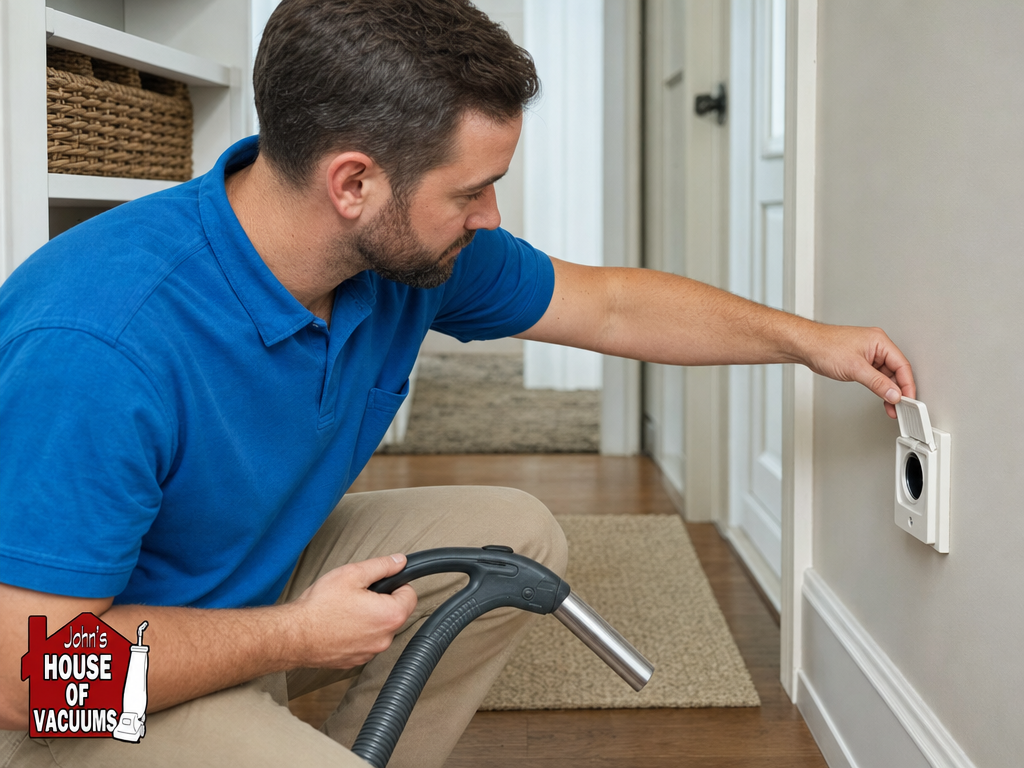
Start with the simplest checks. A central vacuum that won't turn on at all is often a tripped breaker or a loose connection at the low-voltage wire behind the wall inlet — that wire is what tells the power unit to switch on when you plug in the hose.
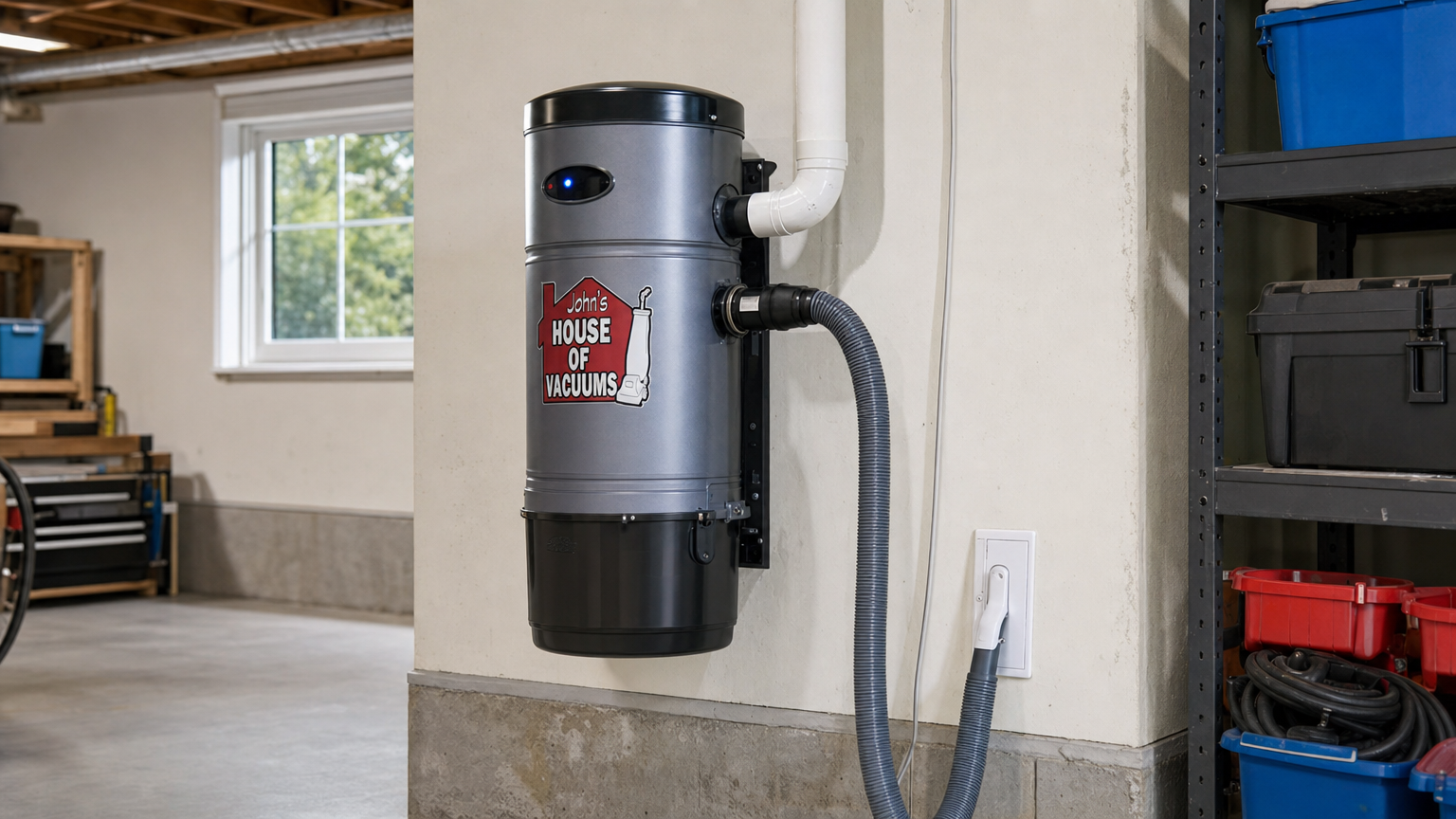
If the unit runs but there's no suction anywhere in the house, check the canister first. A full dirt canister or a clogged filter at the power unit will choke airflow before it ever reaches a room.
If suction is strong at some inlets but weak or missing at others, the blockage is probably sitting in the pipe between that inlet and the power unit. A sock, a toy, or a wad of paper towel is a common culprit. Disconnecting the hose at both ends and feeding a plumber's snake or a garden hose through the pipe will often clear it.
A hose that whistles, hisses, or loses suction partway through a room usually has a crack or a split seam. Hoses take more physical wear than any other part in the system, and they're usually the first thing worth replacing before assuming the power unit itself is failing.
When It's Time to Call for a Repair Visit
Some problems are worth a technician's eyes rather than more troubleshooting. A power unit that hums but won't spin, a burning smell, or a motor that cuts out under load usually points to a worn motor bearing or brush, and that's not something to keep running — it can shorten the life of the rest of the system.
If you've cleared the obvious blockages and still have weak suction throughout the house, the problem may be in a section of pipe you can't reach without opening a wall, or a seal at the power unit that's lost its grip. That's a repair visit, not a DIY fix.
John's House of Vacuums handles repair, parts, and service for central vacuum systems for customers in Newark and across the Wilmington area, out of the Kennett Square store.
What Central Vacuum Repair Actually Costs
There's no single price for central vacuum repair, because it depends entirely on what's wrong. A blocked pipe or a worn hose is a small, inexpensive fix. A motor replacement or a power unit that needs a parts rebuild costs more, and the part itself — the brand, the age of the system, and whether that part is still in production — all affect the final number.
The most reliable way to get an accurate cost is to have the system looked at in person, or to describe the symptoms in detail over the phone, rather than guessing from a general price range.
How Long Should a Central Vacuum System Last?
A central vacuum's power unit sits in a basement, garage, or utility closet rather than getting dragged around the house, which is part of why these systems tend to outlast a typical upright or canister vacuum. That said, nothing in the system lasts forever. Hoses wear out from flexing and dragging across floors. Filters and bags need regular replacement to keep the motor from working harder than it should. Belts and brushes on power heads wear down with normal use, the same as any vacuum.
How long any individual system lasts comes down to how it's maintained — how often filters get changed, whether blockages get cleared promptly, and whether a small noise gets checked out before it turns into a motor problem.
Is It Worth Repairing, or Time to Replace?
Most of the time, repair makes sense. A new hose, a cleared pipe, or a replaced filter costs a fraction of a new system, and it gets you back to full suction the same day in a lot of cases.
Replacement starts to make more sense when the power unit itself has failed and parts for that specific model are hard to find, or when a system is old enough that one repair is likely to be followed by another. If you're weighing that decision, it helps to see a replacement system running in person rather than picking one from a spec sheet. Every vacuum John's House of Vacuums sells gets a hands-on demonstration in the store, so you can hear the suction and the noise level before committing to a system for your house.
Finding the Right Central Vacuum Parts
Hoses, power heads, filters, and bags aren't universal across brands, and a part that looks close enough often doesn't seal properly or fit the inlet valve correctly. Our central vacuum parts and supplies guide covers the parts that wear out most often and how to tell which one your system needs, including for Titan and MD Manufacturing systems.
Serving Newark and the Wilmington, Delaware Area
John's House of Vacuums is based in Kennett Square, Pennsylvania, and serves central vacuum customers in Newark and across the Wilmington, Delaware area. If you're closer to Wilmington, our Wilmington service area page has more on how we cover that part of Delaware.
A warranty or guarantee is offered on sales and service work, as noted on our website. If a question comes up about what's covered on your system, ask when you call or bring the unit in.
Questions and answers
How much does it cost to fix a central vac?
It depends on what's broken — a cleared blockage or a new hose costs far less than a motor or power unit repair. The most reliable way to get an accurate number is to describe the symptoms or bring the unit in so it can be looked at directly, since quoting a price without seeing the system isn't something we can do responsibly.
How do I troubleshoot my central vacuum?
Check the breaker first, then look at the canister and filter for a blockage, then test suction at each wall inlet to find out whether the problem is system-wide or limited to one line. That narrows down whether you're dealing with a clogged pipe, a full canister, or a motor issue.
What is the average lifespan of a central vacuum system?
There's no fixed number. The power unit tends to last a long time because it isn't handled daily, but hoses, filters, belts, and bags wear out well before the unit itself and need regular replacement to keep the system running well.
Is it worth it to get a vacuum repaired?
Usually, yes. Most central vacuum problems are inexpensive fixes — a cleared pipe, a new hose, or a new filter. Replacement is worth considering once the power unit has failed and parts are hard to find, or when a system is old enough that repairs are becoming frequent.
If your central vacuum isn't pulling like it used to, call John's House of Vacuums or stop by the Kennett Square store — we can talk through what you're seeing and get it scheduled for a look.