
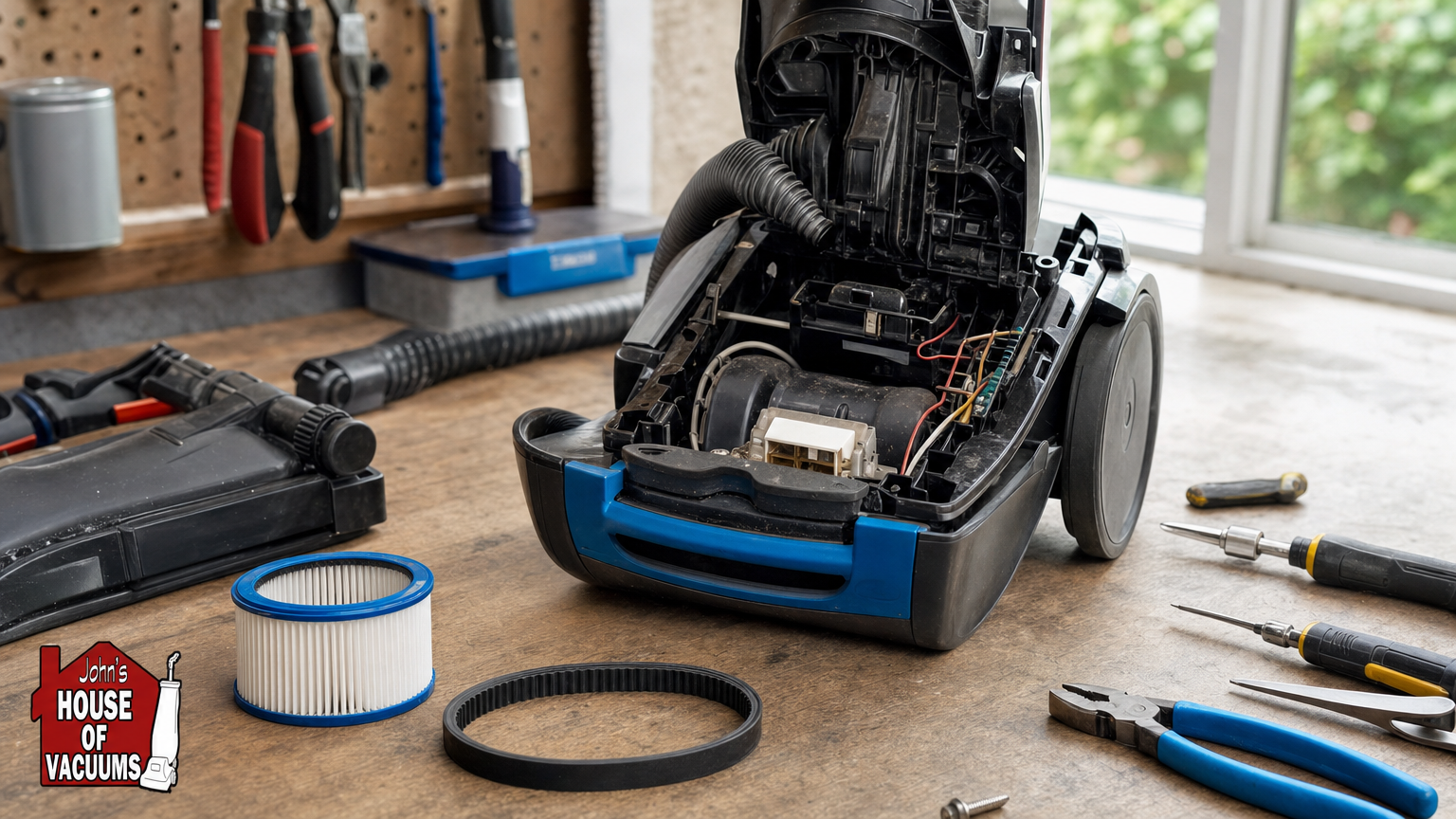
The Short Answer
For most full-size and canister vacuums, yes — repair is usually worth it. Brands like Dyson, Miele, SEBO, Kirby, Oreck and Riccar are built with replaceable parts and serviceable motors, which is exactly why they're worth fixing rather than replacing at the first sign of trouble. John's House of Vacuums repairs these brands and more, and serves customers in Newark, Delaware as part of the Wilmington-area service territory. Most machines that come through the door for low suction, a bad belt, a clogged hose or a tripped motor are fixable without buying a new vacuum.
When Repair Makes Sense
Repair is the right call when the vacuum is a well-built model to begin with and the problem is a specific, identifiable part: a worn belt, a clogged airway, a failing switch, a brush roll that's seized. These are common failures on the brands we service, and they don't usually mean the whole machine is done. Repair makes less sense on a very low-end plastic vacuum where the cost of parts and labor starts to approach the price of a comparable new unit — at that point it's a judgment call based on the specific model and what's actually broken, which is something worth having a technician look at rather than guessing from a description over the phone.
What Affects the Cost of a Repair
Repair cost depends on three things: the brand, which part has failed, and whether the issue is mechanical (a belt, a hose, a brush roll) or electrical (a motor or wiring issue). A belt or filter swap is a different job than a motor repair, and parts availability varies by brand and model age. For example, a vacuum that's lost suction might just need a clogged hose cleared and a filter replaced — a quick, inexpensive fix. But if the motor itself has burned out, that's a different repair entirely, with different parts, more labor, and a bigger question mark over whether it's worth it compared to the age and quality of the machine. That's why we diagnose before we quote — opening the vacuum up and checking it rather than guessing from a phone description gets you an accurate number instead of a guess. If you want to understand what's inside the system before you call, our central vacuum parts and supplies guide walks through the core components and what typically wears out.
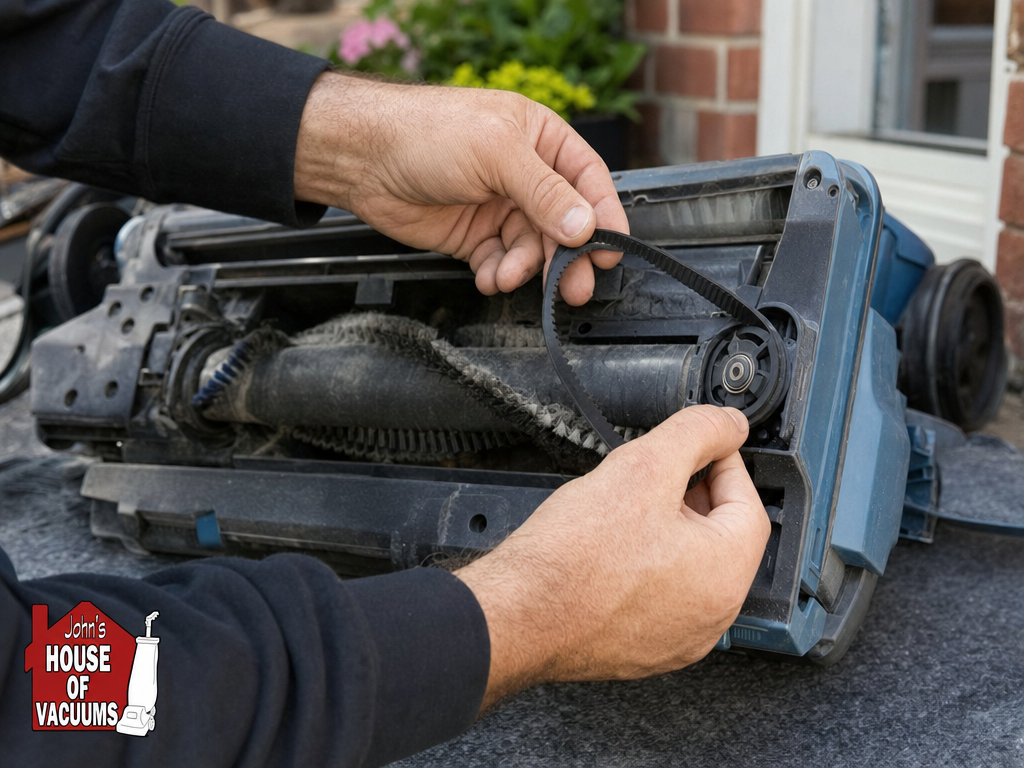
Built-In Central Vacuums Follow a Different Calculation
A portable upright or canister vacuum and a built-in central vacuum system aren't repaired the same way, and the worth-it question looks a little different for each. A central vacuum's power unit is usually mounted in a garage or basement and tied into wall inlets and tubing throughout the house — so a failure there isn't just about the cost of a part, it's also about whether the tubing and inlets are in good shape, since those rarely need replacing and represent money already invested in the system. In most cases that tips the scale further toward repair, because you're not just saving the cost of a new unit, you're preserving a wiring and tubing setup that would be disruptive and costly to redo. If a central vacuum is losing suction or not powering on, it's worth having it looked at before assuming the whole system needs to go.
Repair or Replace: How to Weigh It
The decision usually comes down to two questions: how good is the vacuum underneath the problem, and how much is the fix. A well-built machine with one failed part is almost always cheaper to repair than to replace, and you keep the performance you already know. A low-end machine with a major failure — a dead motor, for instance — is where replacement often makes more sense. If you're on the fence, it helps to see your options side by side. Our hands-on demonstrations let you try a replacement vacuum in person before you commit to buying one, so you're not choosing blind if repair turns out not to be the right call for your machine.
How Long Should a Vacuum Last?
In general, a well-maintained vacuum from a brand designed for serviceability can run for many years with occasional repairs and routine maintenance — things like belt changes, filter cleaning and brush roll upkeep. Cheaper, disposable-style vacuums are typically built with a shorter usable life and fewer serviceable parts, so repair options narrow faster. This is general guidance that applies across brands; the realistic lifespan of your specific vacuum depends on the model and how it's been used and maintained.
Repair Service for Newark and the Surrounding Area
We repair and service Dyson, Kenmore, Kirby, Miele, Oreck, ProTeam, Riccar, SEBO, Shark, Windsor and most other brands, and we offer a guarantee on the repair work we perform. For a quick tune-up rather than a full repair, ask about our Performance Maintenance Tune-Up, which cleans, disinfects and deodorizes a vacuum that's just running rough rather than broken outright. Customers near Newark are served as part of our Wilmington-area coverage — you can see more about that service territory on our Wilmington vacuum repair page, or read more about how our repair process works on our about us page.
Questions and answers
Are vacuums worth repairing?
Usually, yes, if the vacuum is a well-built brand and the failure is a specific part rather than a worn-out motor on a low-end machine. Most issues we see — belts, clogs, switches, brush rolls — are straightforward fixes on brands like Dyson, Miele, SEBO, Kirby, Oreck and Riccar.
How much does it typically cost to repair a vacuum?
It depends on the brand, the part, and whether the failure is mechanical or electrical. A belt or filter replacement costs far less than a motor repair, and parts availability varies by model age. Because the range is wide, we don't quote a flat price over the phone — bringing the vacuum in, or describing the symptoms in detail, lets us give you an accurate number rather than a guess.
Is it cheaper to repair or replace a vacuum?
It depends on the vacuum and the failure. A single failed part on a quality machine is typically cheaper to repair than to replace. A major failure on a low-end model may cost close to what a comparable new vacuum would, which tips the decision toward replacement.
What is the average lifespan of a vacuum?
A well-maintained vacuum built for serviceability can last for years with routine upkeep and occasional repairs. Lower-end machines are generally built with a shorter lifespan and fewer parts that can be serviced, so they wear out and get replaced sooner.
If your vacuum is losing suction or acting up, call or text John's House of Vacuums to describe the problem and get an honest read on repair versus replacement — Newark customers are served as part of our regular Wilmington-area coverage.